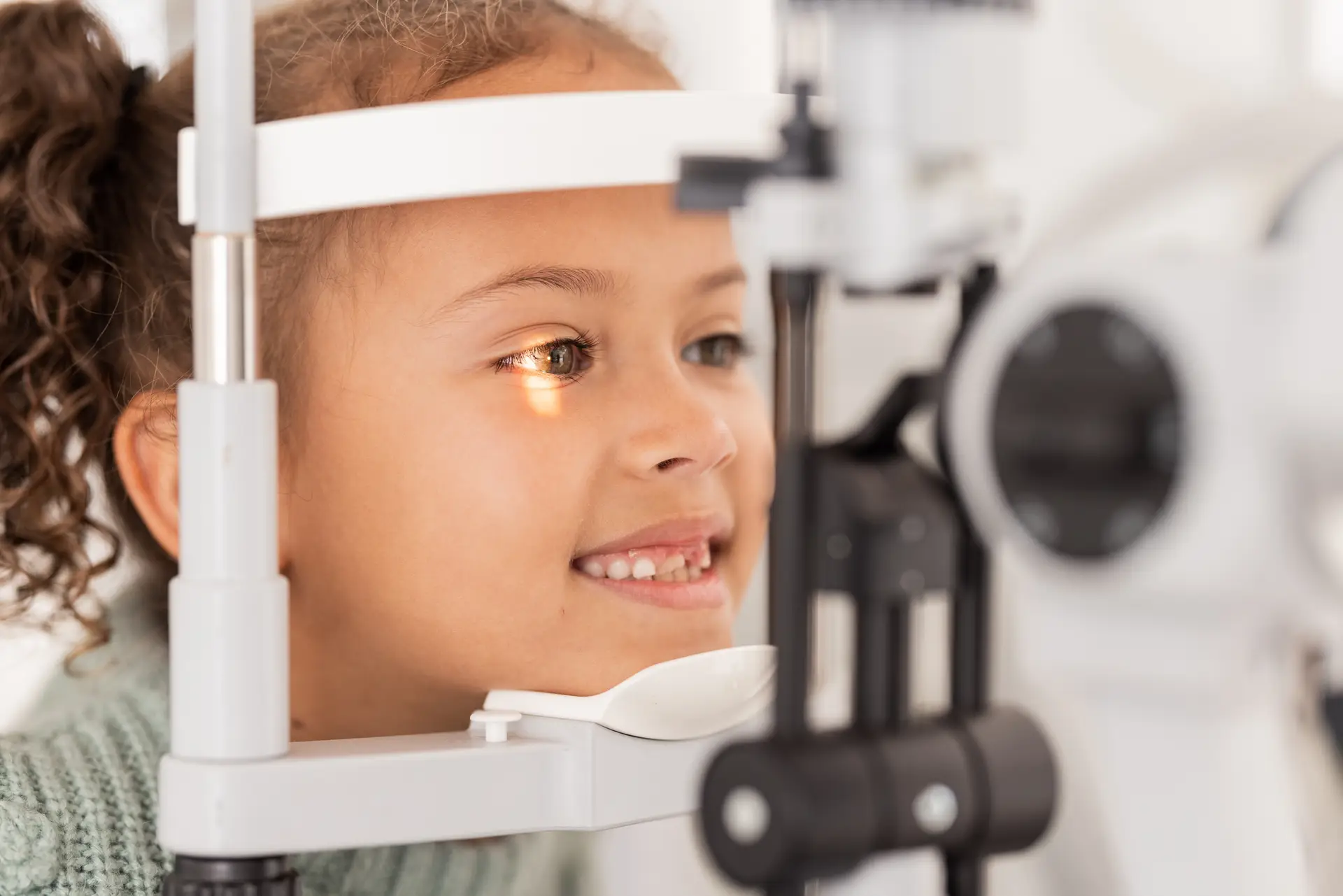
Watching your child’s vision worsen year after year can feel like a losing battle. As parents notice their children squinting at the whiteboard or moving closer to the television, many wonder if there is anything they can do to slow down myopia’s relentless progression.
At Focused Eye Care, our team of doctors provides comprehensive children’s eye exams and advanced myopia management solutions. With more than 60 years of combined experience serving families throughout New Hampshire, our optometrists use cutting-edge technology to address progressive nearsightedness in children and help protect their long-term vision health.
What Causes Myopia to Progress in Children?
Myopia develops when the eye grows too long from front to back, causing light to focus in front of the retina instead of directly on it. This growth typically begins during childhood and accelerates during the school years when visual demands increase significantly.
Several factors contribute to myopia progression in children. Genetics plays a substantial role, as children with one or both nearsighted parents face a higher risk of developing and progressing myopia. Extended near-work activities, including reading, homework, and screen time, can strain developing eyes and encourage further elongation of the eyeball. Additionally, reduced time spent outdoors has been linked to faster myopia progression, as natural light exposure may help regulate healthy eye growth.
Age-Related Progression Patterns
Myopia progression follows predictable patterns based on age. Children who develop nearsightedness at a younger age, typically between 6 and 8 years old, tend to experience more rapid progression compared to those who develop nearsightedness later in life. The rate of progression generally peaks during elementary school years and slows as children approach their late teens, though significant changes can continue until the early twenties.
Environmental and Lifestyle Factors
The modern learning environment contributes to an increased risk of myopia. Children spend considerable time focusing on close objects, whether textbooks, tablets, or smartphones. This sustained near-vision work may signal the eye to grow longer to reduce the effort required for focusing. Schools with limited outdoor time and bright indoor lighting exacerbate these environmental factors, creating conditions that favor the development and progression of myopia.
Health Risks Associated with Progressive Myopia
Progressive myopia represents more than an inconvenience requiring stronger prescriptions. Children with high myopia face elevated risks for serious eye conditions later in life, including retinal detachment, glaucoma, and early cataract development.
The stretched retinal tissue in highly myopic eyes becomes thinner and more vulnerable to tears and detachments. The risk of glaucoma increases as the elongated eye shape affects the fluid drainage structures within the eye. Cataracts may develop decades earlier in individuals with high myopia compared to those with normal vision or mild refractive errors.
Beyond medical risks, progressive myopia affects daily life and activities. Children with rapidly worsening vision may struggle academically, feel self-conscious about thick glasses, and face limitations in sports participation.
Modern Solutions for Slowing Myopia Progression
Early intervention through myopia control can help reduce these long-term complications and improve quality of life.
Stellest Spectacle Lenses
Recent advances in optical technology have produced innovative solutions for managing childhood myopia. Stellest lenses represent the first and only FDA market-authorized spectacle lens designed to slow the progression of nearsightedness in children. Clinical studies show Stellest lenses slowed myopia progression by 71% on average in children who wore them at least 12 hours daily. This remarkable effectiveness makes them a powerful tool for parents seeking to protect their children from the risks associated with high myopia.
These specialized lenses feature a unique design with concentric rings that create a signal in the peripheral retina, discouraging excessive eye elongation while providing clear central vision. Unlike traditional single-vision lenses, Stellest lenses actively work to manage myopia progression rather than simply correcting existing refractive error.
Orthokeratology
Orthokeratology, often referred to as Ortho-K, provides an effective alternative approach to managing myopia. This non-surgical method uses specially designed rigid gas-permeable contact lenses worn overnight to temporarily reshape the cornea. Children wake with clear vision throughout the day without needing glasses or daytime contact lenses.
Beyond the convenience of daytime freedom from corrective eyewear, Ortho-K has been shown to significantly slow myopia progression. The reshaping effect creates peripheral defocus, similar to Stellest lenses, which appears to slow axial eye elongation. Many parents appreciate this dual benefit of vision correction and progression control in a single treatment approach.
Creating an Effective Myopia Management Plan
Regular comprehensive eye exams form the foundation of effective myopia management.
Annual Eye Exams and Monitoring
Children should receive routine eye exams at least annually to track vision changes and adjust treatment plans accordingly. More frequent visits may be necessary during periods of rapid progression or when implementing new myopia control strategies.
During these examinations, optometrists measure not only refractive error but also axial length, the most accurate indicator of myopia progression. This measurement helps determine whether interventions are effectively slowing eye growth. Monitoring these metrics over time allows for proactive adjustments to treatment approaches.
Lifestyle Modifications
Supporting professional treatments with lifestyle changes enhances the effectiveness of myopia control. Encouraging children to spend more time outdoors can help slow progression. Research suggests that at least 90 minutes of outdoor activity daily may provide protective benefits against myopia development and progression.
Managing near-work activities also plays an important role. Implementing the 20-20-20 rule provides regular breaks from close vision tasks: every 20 minutes, children should look at something 20 feet away for at least 20 seconds. Ensuring proper lighting and maintaining appropriate working distances from screens and books further reduces strain on developing eyes.
Protect Your Child’s Vision at Focused Eye Care
Understanding myopia progression empowers parents to take proactive steps in protecting their children’s vision. Early intervention with proven treatments, such as Stellest lenses or Ortho-K, can significantly slow progression and reduce the risk of serious eye health complications in adulthood.
At Focused Eye Care, our experienced team includes pediatric eye care specialists and doctors trained in advanced myopia management techniques.Our 10 doctors, all members of the American Optometric Association and New Hampshire Optometric Association, serve families at both our Nashua and Milford locations, providing personalized care backed by state-of-the-art diagnostic technology. Schedule an appointment today to discuss myopia management options for your child.